
Fixing Leaking Taps in Period Homes
Imperial threads, seized spindles and worn seats: why tap repairs in older Brighton homes are a different job, and how we approach them.
By the Brighton Plumbing Co teamPublished 12 July 2026
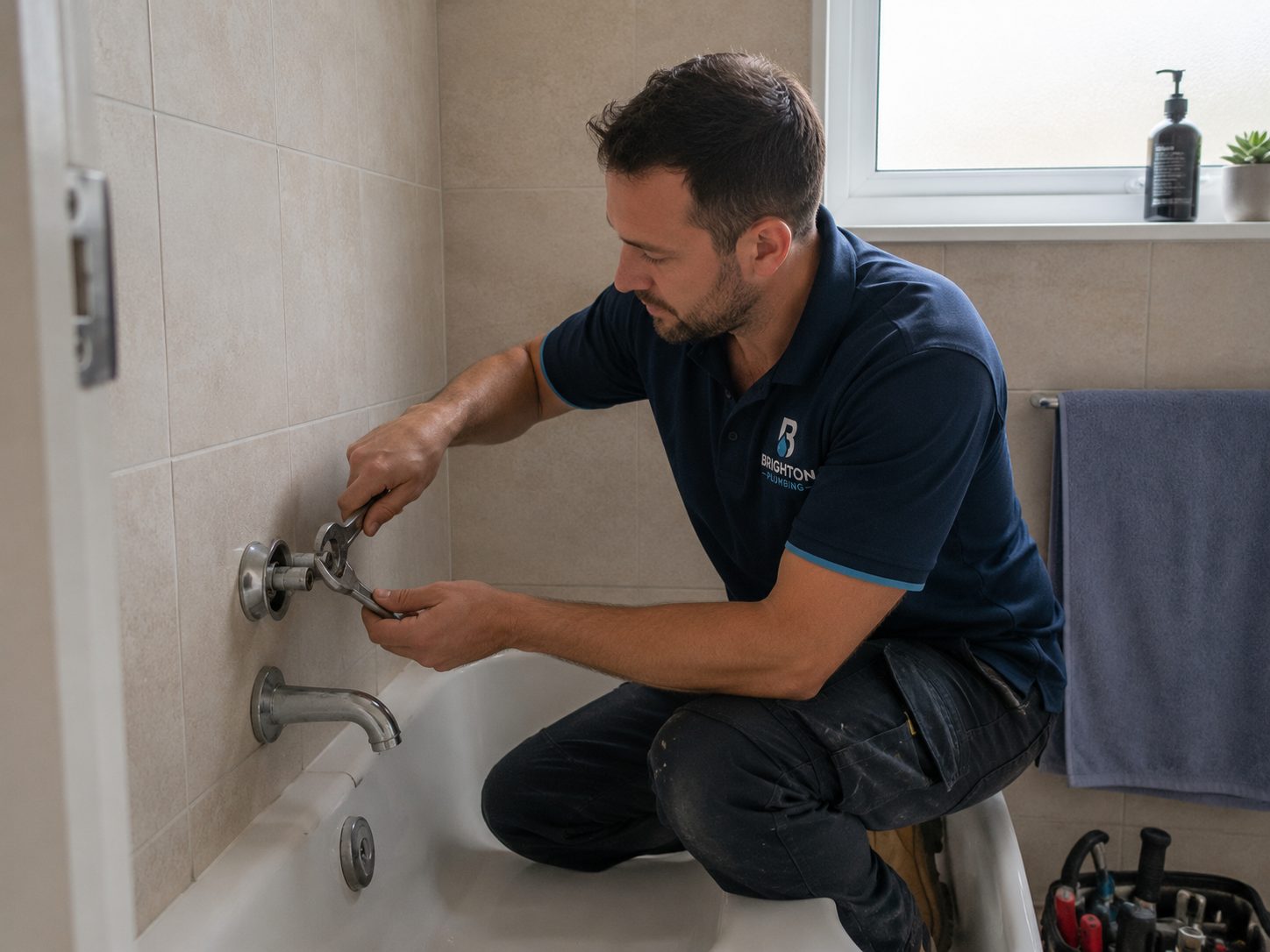
Why old taps are a different job
A dripping tap in a new apartment is usually a fifteen-minute job with a standard part. A dripping tap in an Edwardian weatherboard in Brighton or a Californian bungalow in Brighton East can be a genuinely different exercise, and it pays to understand why before anyone puts a spanner on it.
The taps themselves are often decades old, sometimes original to the house. Australia moved from imperial to metric plumbing in the 1970s, so pre-metric homes carry tap bodies, threads and washers in imperial sizes that modern off-the-shelf parts do not always match. Add fifty-plus years of mineral build-up, hard-set thread compounds and brass that has been worked on many times, and the humble tap becomes a small exercise in mechanical sympathy.
None of this means old taps cannot be fixed. Most can, and fixing them is usually better than replacing them, both for the look of the house and because replacement often drags wall tiles and pipework into the job. It just means the repair has to be done with the right parts and a light touch.
How a traditional tap works, and where it leaks
Nearly every older Australian tap is a jumper-valve design. Turning the handle winds a threaded spindle down, pressing a small washer on a brass jumper valve against a machined ring in the tap body called the seat. Washer against seat stops the water. Everything that goes wrong is a variation on those few parts.
A drip from the spout means the washer is no longer sealing against the seat: either the washer has hardened and cracked, or the seat itself has been eroded by years of water and grit into a pitted, uneven ring no new washer can seal against. A leak from around the handle when the tap is on means the spindle’s O-ring or the body packing has worn. A tap that needs real force to turn off completely is telling you the seat is damaged and someone has been compensating by over-tightening, which crushes washers, strains the spindle thread and makes everything worse.
The three classic period-home complications
Three problems come up constantly in pre-1970s Bayside homes, and they are where do-it-yourself repairs most often come unstuck.
- Imperial threads and sizes. Pre-metric tap bodies take washers, jumper valves and spindles in imperial dimensions. A near-enough metric part might go in, but it will not seal for long and can damage the brass. The fix is carrying the right imperial-compatible parts, which we do, because around here we need them weekly.
- Seized spindles and bonnets. Decades of mineral deposits and old jointing compound effectively glue components together. Forcing a seized bonnet with a bigger spanner is how tap bodies crack and how fragile old pipework behind the wall gets strained. Penetrating oil, controlled heat and patience get it apart; brute force creates a burst-pipe job out of a dripping tap.
- Worn seats. A new washer pressed onto a pitted seat drips again within weeks. The proper repair is reseating: a cutting tool machines the seat flat and true again so the washer has something to seal against. It is a standard part of our tap service on older homes, and skipping it is the main reason repairs by others do not hold.
What a proper tap service looks like
When we service taps in a period home, the routine is deliberately thorough, because the marginal cost of doing it properly while the tap is apart is small.
We isolate the water, dismantle the tap carefully, and assess the spindle, jumper valve and seat rather than just swapping the washer. Seats get machined true where worn. Washers and body washers are replaced with the correct sizes, O-rings renewed, spindles cleaned and lubricated with the right grease so the handles turn easily again. Where a spindle thread is worn beyond service we replace the spindle, keeping the original body and handles where the owner wants to preserve them. Then every tap is tested under full pressure, on and off, before we call it done.
It is worth doing the whole house in one visit rather than tap by tap. The taps are all the same age, and if the kitchen tap’s washer has failed, the bathroom set is rarely far behind. One visit, every tap serviced, and the drips stop arriving one by one over the following year.
DIY or plumber: the honest line
In Victoria, replacing a tap washer is one of the few plumbing tasks a homeowner may legally do themselves, and on a modern tap in good condition a handy owner can manage it. Almost everything beyond that, including replacing a tap, working on the pipework, or anything involving the water supply beyond the washer, legally requires a licensed plumber, and the Victorian Building Authority is the place to check where the line sits.
On a period home our practical advice is more conservative than the legal line. If the tap is pre-metric, if anything feels seized, or if a new washer did not stop the drip, stop there. The failure modes are not messy inconvenience but cracked brass bodies and strained old pipes inside walls, and that is an expensive way to save a service call. A dripping tap also wastes a surprising amount of water over months, so it is not a fault that rewards waiting.
We fix and service taps across Brighton, Brighton East, Hampton, Gardenvale, Elwood and Sandringham, carry the imperial-compatible parts these homes need on the van, and will tell you plainly if a tap is beyond sensible repair before any work starts.
Common questions
Can original brass taps in a period home usually be saved?
Usually, yes. Most old jumper-valve taps can be reseated, re-washered and lubricated back to smooth, drip-free service, and keeping the originals often suits the house better than modern replacements. The exceptions are cracked bodies and spindle threads worn beyond service, and we tell you which case yours is before quoting.
Why does my tap drip again a few weeks after a new washer?
Almost always a worn seat. A washer cannot seal against a pitted, uneven brass ring for long, no matter how new it is. Machining the seat flat with a reseating tool fixes the actual problem, and it is the step most quick repairs skip.
Is it legal to change a tap washer myself in Victoria?
Yes, replacing a washer is one of the few plumbing tasks a homeowner may do. Replacing taps or working on pipework requires a licensed plumber, and the Victorian Building Authority publishes guidance on exactly where that line sits. On seized pre-metric taps we would counsel care even with the washer.