
Sandringham Coastal Homes: Hot Water Placement
Salt air shortens the life of hot water units in Sandringham. Where to put a new system, and how siting and small habits buy extra years.
By the Brighton Plumbing Co teamPublished 12 July 2026
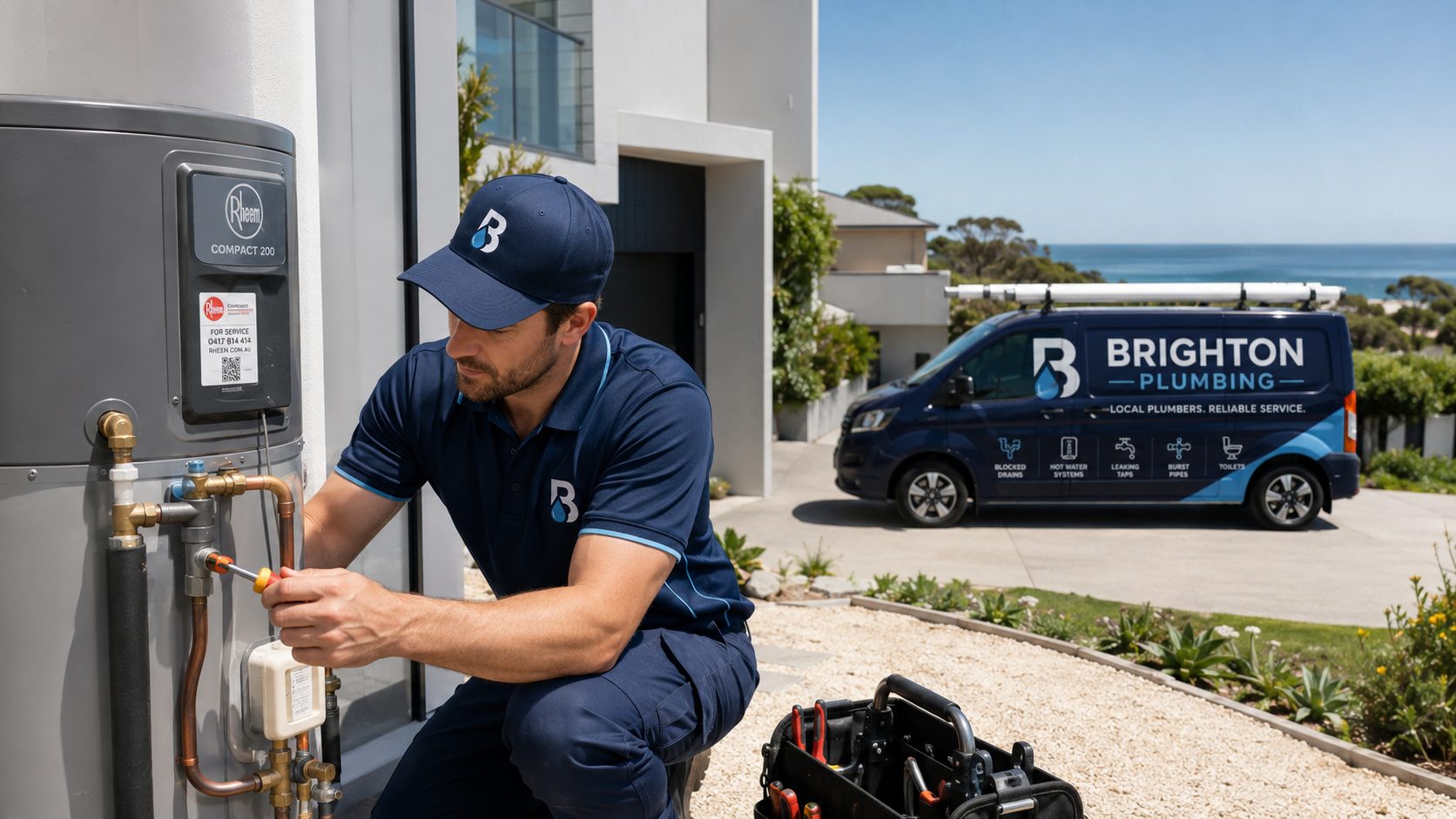
Why the beach is hard on hot water units
Sandringham’s cliff-top streets and beach-side blocks get the best of the bay and the worst of its weather. Onshore winds carry fine salt spray well inland, and that salt settles on everything, including the hot water unit standing against your side fence. Salt is hygroscopic, meaning it pulls moisture out of the air, so a salty surface stays damp long after the wind has dropped. Damp plus salt plus metal is a corrosion engine that never switches off.
The results are predictable. External casings rust through at the seams, relief valves and fittings seize or weep, burner compartments on gas units corrode, and electrical components fail early. A unit that would run twelve or fifteen years in an inland suburb can be visibly struggling at seven or eight within a few hundred metres of the water. We replace hot water systems all over Bayside, and the youngest failures are consistently the ones facing the bay.
Exposure is not equal on every wall
The single biggest siting decision is which side of the house the unit lives on. Salt load drops quickly with shelter. A unit on a wall facing the bay, catching the prevailing south-westerlies, lives the hardest life on the property. The same unit around the corner on the leeward side, shielded by the house itself, sees a fraction of the spray.
When we plan a replacement in Sandringham we walk the block first and look for the sheltered options, in roughly this order of preference.
- Inside: a garage, laundry or purpose-built cupboard removes weather exposure almost entirely for storage units that can be installed internally with the required drainage and ventilation
- Leeward external walls: the side of the house facing away from the bay, ideally under an eave, out of direct spray and driving rain
- Screened positions: behind a fence, wall or purpose-built enclosure that blocks wind-borne spray while keeping the clearances the unit needs
- Exposed seaward walls: the last resort, used only when pipework, gas and drainage realities leave no alternative
The rules that shape where a unit can go
Placement is not a free choice, which is why this is a design conversation rather than a like-for-like swap. Gas units need flue clearances from windows, doors and boundaries. Relief valves need a safe drain point. Internal installations need a safe tray and drain in most cases, and heat pumps need airflow around the evaporator plus a thought for noise, because a heat pump running overnight beside a neighbour’s bedroom window causes a different kind of storm. These requirements come from the plumbing standards and manufacturer instructions, and a licensed plumber has to satisfy all of them, so the sheltered spot you have in mind may need pipework changes to make it legal.
It is worth making those changes. Moving a replacement unit from an exposed wall to a sheltered one adds modest cost at changeover time and pays it back in years of extra service life. The most expensive unit position is the one chosen in a hurry on the day the old unit died.
Choosing a unit that suits salt air
Some systems tolerate coastal conditions better than others. Fully internal storage systems dodge the problem entirely. Among external options, units with well-sealed cases and quality coatings last longer, and several manufacturers make specific recommendations, and in some cases warranty conditions, about installation distance from the coast, so it pays to check the fine print before choosing a model. Heat pumps deserve special mention: they are excellent on running costs, but their evaporator is essentially a car radiator standing in the weather, so sheltered siting and models rated for coastal use matter more, not less.
Inside the tank, the sacrificial anode is your unsung protector. It is a metal rod designed to corrode instead of the tank lining. In coastal homes we recommend having the anode checked around the five-year mark and replaced if it is heavily consumed. It is one of the lowest-cost interventions in plumbing relative to what it protects, and almost nobody does it.
Habits that add years
Between installations, a few low-effort habits meaningfully slow the salt.
- Rinse the outside of the unit with fresh water a few times a year, the same way coastal owners rinse cars and window frames
- Keep plants, mulch and stored items clear of the unit so air circulates and the casing dries after rain
- Ease the temperature and pressure relief valve open briefly every six months so it does not seize, and call a plumber if it will not reseal
- Look over the fittings and pipework each spring for green or white corrosion bloom and rust streaks, and photograph anything that is changing
- Have the anode inspected around year five, and book a general service if the unit is over eight years old and has never had one
Planning ahead beats replacing in a panic
If your Sandringham unit is past eight years old and standing on an exposed wall, the useful move is to plan its replacement before it makes the decision for you. That gives you time to pick the right system, put it in the right place, and schedule the work at your convenience instead of going without hot water while decisions get made under pressure. We give fixed quotes before any work starts, and honest advice on repair versus replace, including when a repair is genuinely the better call. Hot water replacement and repair is licensed work in Victoria, covering the plumbing, gas and relief-valve side, so whoever does yours, make sure they are licensed and provide the compliance paperwork for the job.
Common questions
How long should a hot water unit last near the beach?
Expect less than the brochure figure. External units within a few streets of the bay commonly show serious corrosion by seven to ten years, while the same unit sheltered or installed internally can run well past that. Siting, anode maintenance and the occasional fresh-water rinse are what move the number.
Can my new unit go in a different spot than the old one?
Usually, yes. Relocating a unit to a sheltered wall or indoors adds some pipework, and the new position must meet clearance, flue and drainage requirements, which we confirm on site. At changeover time the extra cost is modest compared with the service life it buys in a coastal suburb.
Are heat pumps a good idea in a salty coastal suburb?
They can be excellent, but siting matters more than for any other system because the evaporator coil is exposed to the air passing through it. Choose a model the manufacturer rates for coastal installation, give it a sheltered position with good airflow, and think about noise near boundaries.
What is the anode and why does everyone ignore it?
The anode is a sacrificial metal rod inside a storage tank that corrodes in place of the tank lining. Once it is consumed, the tank itself starts corroding and the countdown to replacement begins. It is ignored because it is invisible. In coastal homes, checking it around year five is cheap insurance.