
Street Trees and Your Sewer: A Bayside Guide to Root Trouble
Which Bayside street trees invade sewers, how roots actually get into the pipe, and which fixes last versus which just buy time.
By the Brighton Plumbing Co teamPublished 12 July 2026
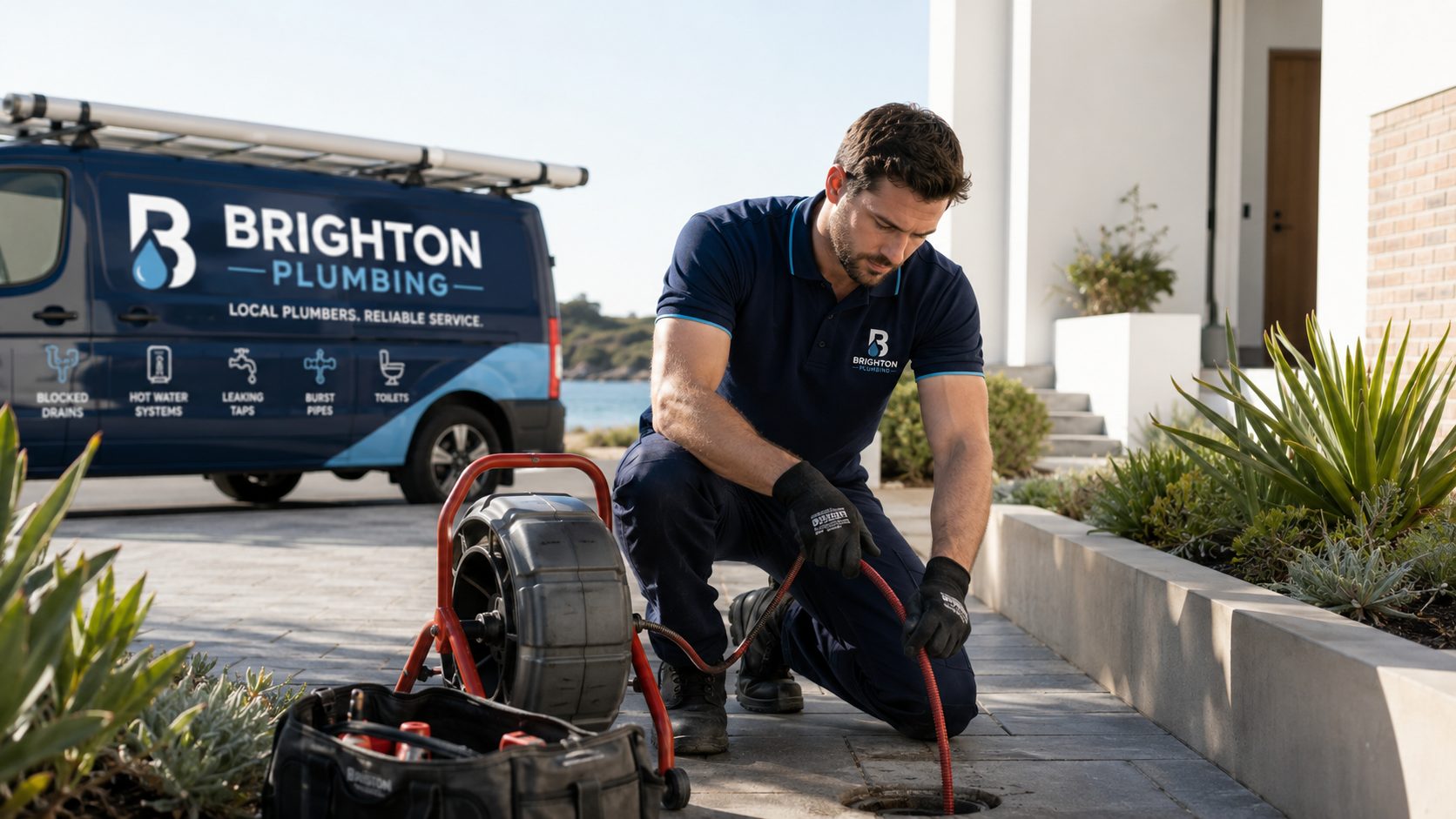
The trade-off in every leafy street
The tree canopy is a big part of why people love Brighton, Brighton East, Hampton and the rest of Bayside. Plane trees arching over the street, figs on the corners, gums and paperbarks along the nature strips. The same canopy has a below-ground half that nobody photographs, and a fair portion of it is growing toward, and sometimes inside, the suburb’s sewers.
Root intrusion is comfortably the most common cause of the blocked drains we clear across Bayside. It is worth understanding properly, because the difference between treating it and fixing it is the difference between calling a plumber every winter and not thinking about your drains for twenty years.
How a root actually gets into a pipe
Roots do not crush their way into a sound pipe. They exploit openings that already exist. Most Bayside homes built before roughly the 1970s drain through glazed earthenware pipes laid in short sections, with a joint every 600 millimetres or so, originally sealed with cement mortar or a rope-and-compound packing. Every one of those joints is a seam, and after decades of ground movement, most old lines have at least a few joints that weep.
A weeping joint releases moisture and nutrients into the surrounding soil, and tree roots are superb at following that gradient. A feeder root finer than a human hair finds the gap, enters the pipe, and suddenly has access to water, oxygen and nutrients in abundance. Inside the pipe it thickens and branches into a curtain of fine roots hanging in the flow. That curtain catches paper, wipes, fat and everything else, and one day the line blocks. As the root grows it also wedges the joint further open, so the problem compounds: more flow escapes into the soil, attracting more roots, while the joint that let them in slowly levers apart.
The usual suspects on Bayside streets
Any tree can invade a leaking pipe, but some are dramatically more efficient at it. From what comes out of Bayside drains on the end of our cutting heads, these are the repeat offenders.
- London plane trees: the signature street tree of Brighton and Brighton East, vigorous, thirsty, and responsible for more root blockages here than any other species
- Moreton Bay and Port Jackson figs: magnificent and merciless, with aggressive root systems that can travel well beyond the canopy to a leaking joint
- Willows and poplars: less common now, but legendary invaders wherever older specimens survive near drainage lines
- Large eucalypts: variable by species, but big river reds and spotted gums on nature strips show up in sewers regularly
- Ornamental pears and melaleucas: smaller trees that still find their way into shallow house drains, especially where a joint sits within a garden bed that gets watered
Reading the symptoms
Root intrusion has a recognisable rhythm. Drains slow gradually rather than blocking overnight. Gurgling from the toilet or floor waste when other fixtures drain is an early sign, as is a gully trap outside that surges or overflows when the washing machine empties. The strongest tell is the calendar: blockages that recur every one to two years, often in winter and spring when trees are drawing hard and growing fast, are roots regrowing through the same joints. If your drain has been cleared more than once and nobody has put a camera down it, you are managing a symptom without a diagnosis.
What works, what merely buys time
Cutting the roots out restores flow, and for a first blockage it is the right initial move. An electric eel with a cutting head chops the root mat mechanically. High-pressure water jetting cuts the roots and flushes the debris out of the line, and generally does a more thorough job on heavy growth. Either way, be clear about what has happened: the roots have been pruned, underground, and pruning stimulates regrowth. Cutting alone is a maintenance cycle, not a repair.
Fixing it means closing the entry points. Where the pipe is structurally sound but the joints leak, relining is usually the answer: a resin-saturated liner is inverted or winched through the line and cured in place, creating a continuous jointless pipe inside the old one. No joints, no entry points, no roots, and no trench through the garden. Where sections have collapsed, dropped or back-fall has developed, excavation and replacement with rubber-ring-jointed PVC is the honest fix for those runs, sometimes combined with relining of the sound sections.
The decision between these options should be made looking at camera footage, not guessing from the surface. A proper inspection maps which joints are affected, locates them on the ground with a sonde, and shows the pipe’s structural condition. We do that first on every recurring blockage and walk you through the footage before quoting, because you should not buy a reline you cannot see the reason for.
One thing we do not recommend as a plan: removing a healthy street tree. Council trees are protected and are not yours to remove in any case, and a neighbouring tree can reach a leaking joint from a surprising distance. The tree found a defect in the pipe. Fix the pipe.
Living with trees and keeping your drains
If you are in an older Bayside home on a treed street, a few habits keep you ahead of the roots. Know where your sewer runs, and think twice before planting thirsty species on top of it. Treat the first slow drain as information rather than an annoyance. If a line has blocked twice, get it cameraed and priced for a permanent fix, then compare that price honestly against another decade of callouts. And remember that in Victoria, drain clearing and repair is licensed plumbing work, so whoever does it should be licensed, insured and willing to show you exactly what they found. That last part is the difference between buying a repair and buying a story.
Common questions
How do I know if tree roots are blocking my drain?
The pattern is gradual slowing, gurgling fixtures, a surging outdoor gully, and blockages that recur every year or two, often in winter and spring. A camera inspection confirms it by showing the roots in the pipe, and locates exactly which joints they are entering through.
Do root-killing foams and crystals fix the problem?
Chemical root treatments can kill the fine roots inside the pipe and slow regrowth, and they have a place as maintenance between cuts. They do not close the openings the roots came through, so the cycle continues. Relining or replacing the affected sections is what ends it.
Can I claim against the council if a street tree blocked my sewer?
Sometimes owners pursue this, but roots almost always enter through defects in private pipework, and responsibility for the private drain rests with the property owner. Camera footage documents the situation either way. You can certainly raise a claim with the council, but plan the repair on the assumption it is your pipe.
Will relining make the pipe narrower and cause blockages?
A liner takes only a few millimetres of diameter, and the finished surface is far smoother than jointed earthenware, so flow typically improves rather than suffers. The line must be properly cleaned and any collapsed sections repaired first, which is why relining follows a camera inspection rather than replacing one.